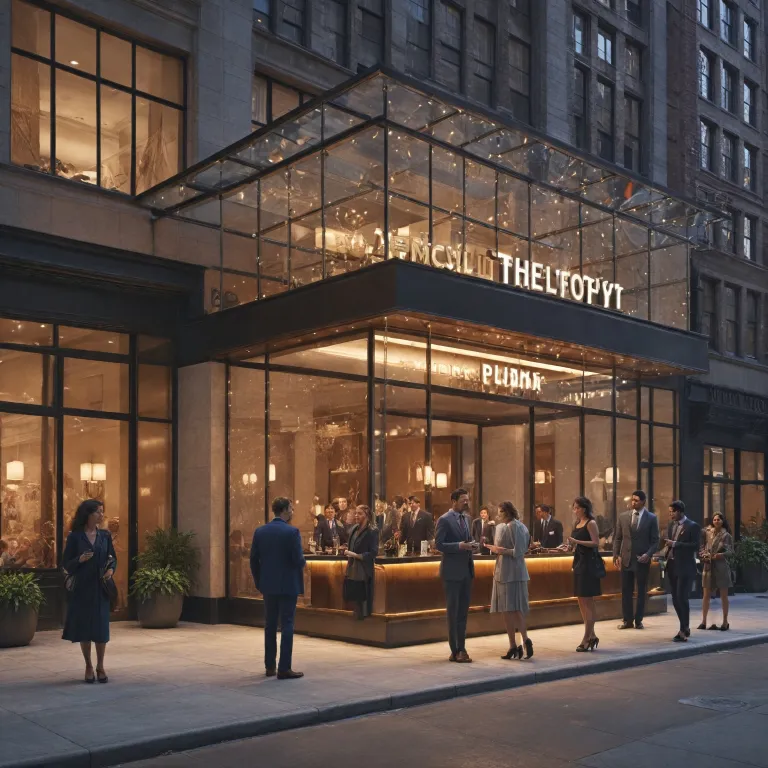
From the london hotel nyc to a new luxury collection benchmark
For many revenue leaders, “the london hotel nyc” still evokes a specific image of a luxury collection property in manhattan midtown. Yet the rebranding of this hotel manhattan asset into Conrad New York Midtown has become a case study in how reservations strategy must evolve when a collection hotel changes positioning. Located at 151 West 54th Street in the west side corridor between central park and Times Square, the former london nyc now operates under Conrad Hotels & Resorts management. This shift forced OTAs, PMS and CRS editors, and digital commerce teams to rethink how they handle legacy brand equity while aligning with new luxury standards.
The property’s inventory of 562 suites, each around 49 square metres, transformed the traditional room grid that many systems still labelled as a standard hotel. When a portfolio moves from generic suites to a luxury collection of king suite and suite west categories, every reservation touchpoint must reflect that change. The london hotel nyc history still drives search demand, but the current brand promise focuses on expansive rooms, refined facilities, and curated american cuisine dining options. For distribution partners, the challenge lies in mapping old room codes, historic rates, and archived reviews to a refreshed product without losing conversion.
Because the address sits steps from central park and close to the empire state Building, the manhattan skyline and park views remain core to the narrative. Guests still search for a view room or a room view of central park, even when the official naming has shifted. Aligning this behaviour with accurate content, from smoking policy to mini bar details and private bathroom descriptions, is now a critical part of every check of the data pipeline. In this context, the london hotel nyc is less a past brand and more a live keyword that continues to shape reservations performance across the united states source markets.
Rebranding impact on reservation flows, rates, and room mapping
The rebranding from the london hotel nyc to Conrad New York Midtown did not only change signage ; it rewired how rates and rooms are perceived and sold. Hilton’s management and the integration into its global CRS meant that every king, suite, and view room category needed precise mapping across OTAs and PMS platforms. Legacy london nyc codes for a standard suite west or a bathtub equipped king suite suddenly had to align with a luxury collection taxonomy, including enhanced facilities and upgraded mini bar standards. For digital directors and e commerce managers, this required a meticulous check of every rate plan, cancellation rule, and package.
Because the property consists almost entirely of suites, the traditional segmentation between room and suite became less relevant than between different rooms with distinct room view attributes. A central park view room, a west facing manhattan skyline suite, and an interior king suite with a large bed and private bathroom all command different rates and expectations. When the london hotel nyc brand was active, many partners simplified these nuances, but the Conrad positioning demands sharper differentiation. This is particularly important for meeting banquet business, where planners expect accurate descriptions of connecting rooms, breakout spaces, and general facilities.
Reviews still referencing the london hotel nyc name can create friction if PMS and CRS content does not clearly explain the evolution to a Conrad luxury collection hotel manhattan address. Guests reading older reviews about smoking policies, free Wi Fi, or american cuisine dining options may assume outdated standards. To mitigate this, leading OTAs now surface structured explanations that the london hotel nyc was rebranded as Conrad New York Midtown in October 2019. This explicit statement helps align guest expectations with current service levels and reinforces trust in the booking journey.
Designing reservation journeys around view, bed type, and urban context
In manhattan midtown, the difference between a standard room and a memorable stay often comes down to the view and the bed. At the former the london hotel nyc, now Conrad New York Midtown, the inventory strategy leans heavily on view room and room view descriptors tied to central park, Times Square, or the broader manhattan skyline. A king suite facing west over 7th Avenue offers a very different experience from a suite west overlooking quieter residential blocks near ave york intersections. For OTAs and CRS editors, translating these nuances into structured attributes is essential for both conversion and guest satisfaction.
Guests searching for london nyc or the london hotel nyc frequently filter by bathtub availability, bed size, and smoking policy, even when the property is fully non smoking. Clear tagging of king bed, double bed, and sofa bed configurations within suites helps avoid post arrival disputes and negative reviews. When a private bathroom includes a separate bathtub and shower, that detail should appear in both the general description and the specific room level content. This is particularly relevant for family travellers from the united states and abroad who associate a bathtub with comfort and relaxation after exploring central park or the empire state Building.
Because the hotel manhattan location sits between major attractions, guests often combine business with leisure and expect flexible dining options and in room mini bar offerings. Highlighting american cuisine concepts on site, along with nearby restaurants, supports cross selling and upselling within the reservation flow. For digital teams, a regular check of content accuracy across all channels, including references to the london hotel nyc legacy, ensures that the promise of a luxury collection experience matches the actual facilities. This alignment reduces pre stay friction, supports higher rates, and strengthens long term brand equity.
Leveraging data, reviews, and content to optimise reservations strategy
For OTAs, PMS and CRS editors, and hotel groups, the london hotel nyc story illustrates how data and content must evolve together. Reviews mentioning the london nyc name still influence perception of the current collection hotel, especially when they highlight room size, view, or service gaps. Mining these reviews for recurring themes around bed comfort, bathtub quality, mini bar pricing, or noise from west facing rooms can guide both operational improvements and content updates. When guests praise a specific king suite with a manhattan skyline room view, that insight should inform merchandising and pricing decisions.
Reservation teams increasingly segment demand by micro location, promoting proximity to central park, Times Square, and the empire state Building in different ways. A suite west with a partial park view may appeal to leisure travellers, while a quieter interior king room suits corporate guests attending meeting banquet events. By aligning these preferences with dynamic rates and targeted offers, the hotel manhattan asset can maximise occupancy without eroding average daily rate. External partners can support this by integrating structured attributes such as smoking policy, free Wi Fi, private bathroom features, and dining options into their search filters.
Mid article content strategies can also benefit from best practices shared across markets, as shown in resources on elevating guest experience and optimising suites for modern hospitality such as this analysis of suite optimisation. Applying similar thinking to the london hotel nyc legacy property means treating each suite category as a distinct product with its own demand curve. When OTAs and CRS platforms surface rich media, accurate descriptions of facilities, and transparent rates, they reduce booking friction. Over time, this reinforces the property’s positioning within Hilton’s luxury collection and supports sustained performance in the competitive united states urban market.
Operational alignment between brand standards and reservation technology
The transformation of the london hotel nyc into Conrad New York Midtown required more than a cosmetic refresh ; it demanded deep operational alignment with reservation technology. Hilton’s systems introduced new standards for how rooms, suites, and facilities are coded, from king bed types to mini bar inclusions and smoking policies. PMS and CRS editors had to ensure that every suite west, central park view room, and manhattan skyline category matched the brand’s luxury collection guidelines. Any mismatch between on property reality and digital representation risks negative reviews and costly compensation.
Because the property operates in manhattan midtown, where guests compare multiple hotel manhattan options within minutes, accuracy becomes a competitive advantage. A guest who books a london nyc legacy category expecting a bathtub and private bathroom layout similar to older photos may feel misled if content is outdated. To prevent this, digital teams now schedule regular audits to check room descriptions, facilities lists, and rates across all connected channels. These audits also verify that references to the london hotel nyc clearly explain the rebranding and highlight the enhanced american cuisine dining options and meeting banquet capabilities.
Operationally, front office and reservations staff must understand how the london hotel nyc history still shapes guest expectations at check in. When travellers mention past stays, agents can explain that “The London NYC was rebranded as Conrad New York Midtown in October 2019.” This scripted line, aligned with online messaging, reinforces trust and clarifies that the hotel now operates as part of a Hilton managed luxury collection. Such consistency across human and digital touchpoints strengthens the overall perception of value, justifying premium rates and supporting long term loyalty in the united states and international markets.
Future ready reservation strategies for luxury suites in New York
Looking ahead, the former the london hotel nyc provides a blueprint for future ready reservation strategies in urban luxury suites. As guest expectations evolve, the ability to personalise offers around view, bed type, and in room facilities will differentiate high performing hotel manhattan properties. A central park facing king suite with a generous bed, bathtub, and curated mini bar can be priced and promoted very differently from an interior suite west optimised for business travellers. OTAs and CRS platforms that capture these nuances in both singular and plural room descriptions will better match guests to the right product.
For digital leaders, the priority is to maintain clean data structures that reflect the current Conrad New York Midtown reality while still capturing demand generated by the london nyc and london hotel nyc search terms. This includes tagging rooms with attributes such as smoking policy, free Wi Fi, private bathroom configuration, and proximity to central park or Times Square. Integrating guest reviews into pricing and merchandising decisions allows teams to adjust rates when a particular view room or collection of rooms consistently outperforms. Over time, this data driven approach supports more accurate forecasting and stronger relationships with distribution partners across the united states.
Finally, the location near ave york corridors, the empire state Building, and the broader manhattan skyline ensures that demand for luxury collection suites will remain resilient. By aligning reservation technology, content, and operations, Conrad New York Midtown can continue to leverage the enduring equity of the london hotel nyc name while delivering a thoroughly modern experience. For OTAs, PMS and CRS editors, and hotel groups, this case underscores the importance of continuous content audits, transparent communication at check in, and agile rate strategies. Those who master these elements will be best positioned to thrive in New York’s intensely competitive hospitality landscape.
Key quantitative insights on the london hotel nyc transformation
- The property offers approximately 562 suites, positioning it as one of the largest all suite luxury hotels in Midtown Manhattan.
- Standard suites measure around 49 square metres, significantly larger than the average hotel room in New York.
- The rebranding and renovation programme spanned multiple years, reflecting a substantial capital investment in design and facilities.
- The strategic objective of the rebranding was to strengthen Hilton’s presence in the New York luxury segment and capture a larger share of high value travellers.
Frequently asked questions about the london hotel nyc and reservations
What is the current name of the london hotel nyc ?
The property formerly known as the london hotel nyc now operates as Conrad New York Midtown, a luxury collection style all suite hotel managed by Conrad Hotels & Resorts under the Hilton umbrella. This rebranding reflects a shift toward higher end positioning and upgraded facilities. Distribution partners should reference both names in content to capture legacy search demand.
Where is this hotel located in New York ?
The hotel stands at 151 West 54th Street in manhattan midtown, placing guests within walking distance of central park, Times Square, and major cultural venues. Its west side location between key avenues, sometimes referenced as near ave york corridors, makes it attractive for both business and leisure travellers. This central position is a core selling point in reservation content and marketing campaigns.
What types of rooms and suites are available for booking ?
The property is predominantly an all suite hotel, offering a range of king suites, multi room suites, and specialised view room categories. Guests can choose between central park facing suites, manhattan skyline oriented suite west options, and more tranquil interior rooms. Each suite includes a private bathroom, many with a bathtub, along with a mini bar and other luxury collection amenities.
Which amenities matter most for reservations strategy here ?
From a reservations perspective, the most influential amenities include room size, view, bed configuration, and bathroom layout. Guests frequently filter for king beds, bathtubs, smoking policies, free Wi Fi, and proximity to attractions like central park and the empire state Building. Highlighting dining options focused on american cuisine, meeting banquet spaces, and upgraded facilities also supports higher rates and stronger conversion.
How should OTAs and PMS or CRS editors handle legacy branding ?
OTAs and system editors should clearly state that the london hotel nyc has been rebranded as Conrad New York Midtown while retaining references to the former name for search relevance. This includes mapping old room codes to current categories, updating photos and descriptions, and ensuring reviews are contextualised. Transparent communication around the rebranding helps manage expectations and reinforces trust throughout the booking journey.
Sources: Hilton Management Services ; Conrad Hotels & Resorts ; MorleyNet meetings and incentives insights.
