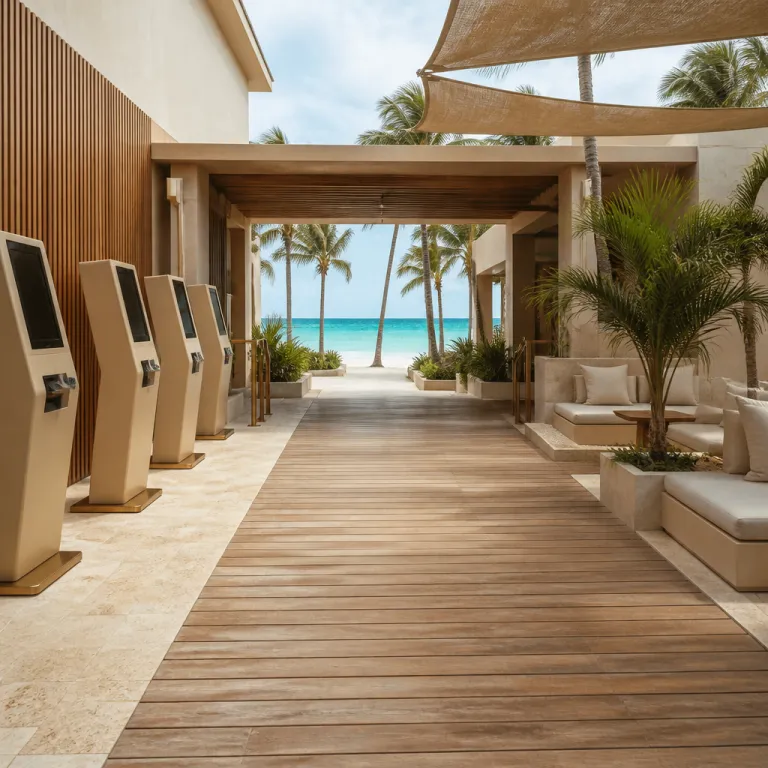
From Gran Caribe legacy to Panama Jack Resorts Cancún as a live test lab
Panama Jack Resorts Cancún occupies the former Gran Caribe site in the Hotel Zone of Cancún, and that legacy matters for reservation strategy. The transition from a traditional Cancún resort model to a fully all‑inclusive resort concept has turned this beachfront hotel into a live laboratory for OTAs, PMS and CRS editors who want to understand how inclusive positioning reshapes demand patterns. For digital leaders in hotel groups, the property’s location on the Caribbean and its family focus generate a dense flow of data across direct and indirect channels.
The resort operates year round with check‑in at 15:00 and check‑out at 12:00, which gives revenue managers a stable operational frame to test length‑of‑stay rules and dynamic pricing. With 458 rooms and junior suite categories facing the Caribbean, Panama Jack Resorts Cancún concentrates enough volume to expose weaknesses in room type mapping, satellite inventory distribution and rate parity monitoring. In internal benchmarking by several distribution teams, even a 2–3% mismatch in mapped junior suite inventory has correlated with a 1–2 percentage point drop in conversion and measurable revenue leakage during high‑occupancy periods.
For technology partners, the evolution from Gran Caribe to Panama Jack has also meant rethinking how all‑inclusive resort attributes are structured in the CRS and PMS. The resort spa, the outdoor swimming areas, the main swimming pool and the family pool with slides all need to be surfaced consistently in content feeds, otherwise the property underperforms against Sunscape‑style competitors in Cancún inclusive searches. This is where a precise taxonomy for resort facilities, from spa to lobby bar and snack bar, becomes a strategic asset rather than a marketing afterthought, and where structured content can be tied back to observable shifts in booking mix and average length of stay.
Case study focus : inclusive resort packaging and its impact on channel mix
Panama Jack Resorts Cancún operates as a fully inclusive resort, and that packaging choice fundamentally changes how reservations behave across channels. When every room includes meals, drinks at each bar and access to the resort spa facilities, OTAs lose the traditional upsell levers based on breakfast or half‑board supplements. For digital commerce leaders and e‑commerce managers, this means that content quality, imagery of the pool and outdoor swimming areas, and clarity around what Cancún inclusive really covers become the primary conversion drivers.
The resort features five à la carte restaurant venues, several snack bar concepts and a lobby bar, all of which must be clearly described in OTA templates and CRS content modules. If a PMS sends incomplete data about coffee options, bar opening hours or spa access, OTAs cannot differentiate Panama Jack from a generic Cancún resort or a competing Sunscape Cancún property. In practice, the most successful partners treat the inclusive offer as a product with attributes, not as a simple board code, and they structure these attributes so that search filters and recommendation engines can surface the right room or junior suite for each guest profile.
For hotel groups benchmarking resorts Cancún wide, Panama Jack Resorts Cancún offers a useful contrast with creative retreat properties in other destinations, such as the best resorts in Maldives for creative minds and artists seeking inspiration. Both types of resort spa product rely on strong storytelling, but the family‑friendly positioning in Cancún demands more emphasis on kids’ pools, flexible bathroom configurations and connecting rooms. In one internal case study shared by distribution teams, clarifying inclusive resort content around children’s facilities and snack bar access reduced pre‑arrival clarification calls by approximately 12% over a six‑month period, while maintaining stable ADR and improving review scores related to “value for money.”
Reservation architecture : how Panama Jack Resorts Cancún stresses PMS and CRS design
Behind the scenes, Panama Jack Resorts Cancún exposes the limits of legacy PMS and CRS architectures that were built for simple city hotels. A beachfront Cancún resort with 458 rooms, multiple junior suite layouts and several pool‑view categories requires granular room type coding and robust satellite mapping across every OTA. When that mapping is weak, the same physical room can appear as three different products, fragmenting reviews and confusing both guests and revenue managers.
The property’s all‑inclusive model also forces CRS designers to rethink how they handle add‑ons and inclusions. Instead of selling breakfast or spa access as extras, the system must embed resort spa usage, bar service and snack bar availability into the base rate, while still allowing upsells such as premium coffee experiences or private outdoor swimming cabanas. This is where lessons from other complex ecosystems, such as how the Hotel Olympia hotel ecosystem reshapes reservations strategy across three continents, become directly applicable to resorts Cancún wide.
For OTAs and PMS & CRS editors, Panama Jack Resorts Cancún highlights the need for flexible API structures that can transmit detailed information about facilities, from air conditioning specifications to flat‑screen sizes in each room. A practical taxonomy might include fields such as bed_type, view, bathroom_features, outdoor_space, coffee_station, spa_included and kids_pool_access, grouped under a consistent room code. When a junior suite includes a king bed, a separate living area and a bathroom with both shower and bathtub, that configuration must be consistently reflected in every connected system. Otherwise, Hyatt guests used to precise room descriptions at a spa Hyatt property or a Star Sunscape style resort will perceive a gap in service quality, even if the on‑site experience at Panama Jack is strong.
Content, imagery and the new role of the hotel website in the ecosystem
For Panama Jack Resorts Cancún, the official website is no longer just a brochure; it is the primary source of structured content for the entire reservation ecosystem. Every description of the swimming pool, the resort spa, the lobby bar or the family snack bar must be written once with precision, then syndicated to OTAs, wholesalers and meta search partners. When the hotel’s content management and CRS are aligned, updates about new rooms or refreshed bathroom designs propagate quickly and reduce inconsistencies.
The property’s location in Cancún’s Hotel Zone, facing the Caribbean, makes imagery especially powerful in driving direct bookings. High‑resolution photos of the outdoor swimming areas, the pool with slides and the junior suite terraces help the hotel compete not only with other resorts Cancún wide, but also with brands like Sunscape that target similar family segments. For digital leaders, the key is to treat each room and suite as a distinct product, with its own set of facilities such as air conditioning details, flat‑screen size, coffee station type and bathroom layout.
Reservation strategists can draw inspiration from how a main hotel phone number can become a strategic node in the reservation ecosystem, then apply similar thinking to contact points at Panama Jack. When the hotel’s call center, website chat and OTA messaging all use the same structured information about inclusive resort services, bar offerings and spa access, agents can check details quickly and give consistent answers. In internal monitoring by several hotel groups, aligning these content sources has been associated with single‑digit percentage reductions in post‑booking complaints and a modest uplift in direct conversion, which in turn supports higher direct share for the Cancún resort without undermining OTA partnerships.
On property experience data : turning service moments into reservation intelligence
What happens after guests arrive at Panama Jack Resorts Cancún is just as important for the reservation ecosystem as what happens before they book. Every interaction at the lobby bar, every request about the resort spa or every question about the inclusive resort coverage generates qualitative data about expectations and perceived value. When this information is captured in the PMS and linked back to specific room types or booking channels, it becomes a powerful feedback loop for OTAs and hotel groups.
For example, if guests in junior suite categories consistently ask whether premium coffee is included at the snack bar, that signals a content gap in both OTA descriptions and the hotel website. Similarly, repeated questions about whether the outdoor swimming pool is heated, or whether the spa Hyatt style treatments are part of the Cancún inclusive package, indicate that the inclusive message is not clear enough at the booking stage. By tagging these questions by channel, digital directors can see whether confusion is higher among Hyatt guests, Sunscape Cancún switchers or first‑time visitors to resorts Cancún wide.
The resort’s family focus also generates specific operational data points that should feed back into reservation strategy. When parents request extra beds in rooms with a king configuration, or when they ask to check availability of connecting rooms near the pool, the hotel’s service team can log these patterns and share them with revenue and distribution teams. Over time, this allows Panama Jack and other Jack Resorts in the group to refine room category names, adjust inventory allocations and create targeted offers that better match real‑world usage of facilities, from bathroom layouts to satellite TV preferences.
Benchmarking Panama Jack Resorts Cancún against Hyatt and Sunscape style competitors
Panama Jack Resorts Cancún does not operate in a vacuum; it competes directly with branded properties such as Hyatt all‑inclusive resorts and Sunscape Cancún style hotels. For OTAs and hotel groups, this competitive set is ideal for testing how different inclusive resort narratives influence booking behavior. When Hyatt guests used to a spa Hyatt environment consider switching to Panama Jack, they compare not only price but also perceived service quality, facilities and room features.
From a reservation data perspective, comparing a Cancún resort like Panama Jack with a Star Sunscape property reveals how brand recognition interacts with content depth. Sunscape resorts often emphasize playful pool areas and family entertainment, while Hyatt tends to highlight spa sophistication and premium bar offerings. Panama Jack sits between these positions, combining casual beachfront energy with a resort spa and multiple à la carte restaurant options, which means its content must clearly articulate both fun and comfort to avoid being perceived as generic among resorts Cancún wide.
For distribution leaders, the key is to build dashboards that track conversion by room type, channel and competitor view share. When a junior suite with a king bed, balcony, air conditioning and flat‑screen television at Panama Jack underperforms similar rooms at a nearby Hyatt or Sunscape resort, the issue is rarely only price. It is often a matter of how the bathroom is described, whether coffee and snack bar access are clearly framed as inclusive, and whether the outdoor swimming and main pool experiences are visible enough in OTA galleries, which directly shapes how guests check and compare options.
Key operational details at Panama Jack Resorts Cancún that shape booking behavior
Panama Jack Resorts Cancún offers a concrete example of how operational details influence reservation patterns across the ecosystem. The resort’s check‑in time at 15:00 and check‑out at 12:00 may seem standard, yet they affect how OTAs display availability and how guests plan flights to Cancún. Clear communication about early check‑in policies, luggage storage and access to the pool or snack bar before room readiness can reduce friction and negative reviews.
The property’s 458 rooms include several junior suite configurations, many with king beds, balconies and sea views, and each variation must be accurately coded in the PMS and CRS. When a room includes a renovated bathroom, upgraded air conditioning and a larger flat‑screen, that information should be reflected in both the hotel website and OTA content feeds. Amenities include pools, water park, spa, fitness center, and multiple dining options. If these facilities are not consistently highlighted, Panama Jack risks being filtered out by guests who are comparing resorts Cancún wide based on specific features such as a resort spa or family‑friendly outdoor swimming areas.
Dining is another operational pillar that strongly shapes booking decisions. With five à la carte restaurant venues, several bar concepts and a lobby bar that anchors the social life of the hotel, Panama Jack must ensure that inclusive resort messaging clearly states which outlets are part of the Cancún inclusive package. When guests know in advance that coffee, snacks and most bar drinks are included, they perceive higher value and are more likely to book longer stays, which benefits both OTAs and hotel groups managing similar Cancún resort portfolios.
Key figures and reservation metrics for Panama Jack Resorts Cancún
- Panama Jack Resorts Cancún operates 458 rooms, which positions it as a medium to large‑scale Cancún resort and provides enough volume for statistically robust A/B testing of room type descriptions and inclusive resort messaging (based on published resort fact sheets and public brand information).
- The property offers five à la carte restaurant venues, giving distribution teams multiple angles to promote dining value in Cancún inclusive packages and to test which restaurant narratives drive higher conversion on OTAs (according to publicly available resort dining overviews).
- Standard operational times with check‑in at 15:00 and check‑out at 12:00 create a predictable framework for modeling arrival curves and optimizing staffing at the lobby bar, front desk and resort spa (as reported in the resort’s guest information materials).
- The combination of pools, a water park, spa, fitness center and multiple dining options means that a significant share of guest activity happens on site, which increases the importance of accurate facilities descriptions in PMS, CRS and OTA content (drawn from the resort’s amenities summaries and industry benchmarking practices).
FAQ about Panama Jack Resorts Cancún and its reservation ecosystem
What amenities does Panama Jack Resorts Cancún offer for guests ?
Amenities include pools, water park, spa, fitness center, and multiple dining options. For reservation partners, this means that content must highlight not only the main swimming pool but also the resort spa, snack bar concepts and family facilities to match guest expectations. When these amenities are fully described in OTA and CRS systems, conversion rates and guest satisfaction both improve.
Is Panama Jack Resorts Cancún suitable for families and groups ?
Yes, it offers family‑friendly activities and facilities, including pools with slides, kids’ areas and flexible room configurations. The mix of standard rooms and junior suite options allows families to choose between king beds, sofa beds and connecting rooms depending on their needs. For hotel groups and OTAs, this makes the property a strong candidate for targeted family campaigns within the broader resorts Cancún portfolio.
What dining options are available at Panama Jack Resorts Cancún ?
The resort features five restaurants serving various cuisines, complemented by several bar outlets and a central lobby bar. These à la carte restaurant venues and snack bar concepts are part of the inclusive resort experience, which should be clearly stated in all reservation channels. When guests understand the full scope of Cancún inclusive dining, they are more likely to perceive Panama Jack as high value compared with nearby Hyatt or Sunscape properties.
How should OTAs and PMS editors handle room type mapping for Panama Jack Resorts Cancún ?
Each room and junior suite category should be mapped with precise attributes, including bed type, view, bathroom layout, air conditioning details and flat‑screen size. Consistent naming across PMS, CRS and OTA platforms reduces confusion and prevents duplicate or fragmented listings for the same physical room. This structured approach helps Panama Jack and other Jack Resorts maintain rate integrity and deliver a smoother booking experience for Hyatt guests, Sunscape switchers and first‑time visitors to Cancún alike.
References
- Resort official website, public fact sheets and guest information materials for Panama Jack Resorts Cancún (consulted for room count, dining venues, amenities and operational times).
- STR and industry benchmarking reports on Cancún resort performance and all‑inclusive trends (used for contextualizing demand patterns and competitive positioning).
- Public documentation from major OTAs and CRS providers on room type mapping, content distribution standards and inclusive resort packaging practices.
