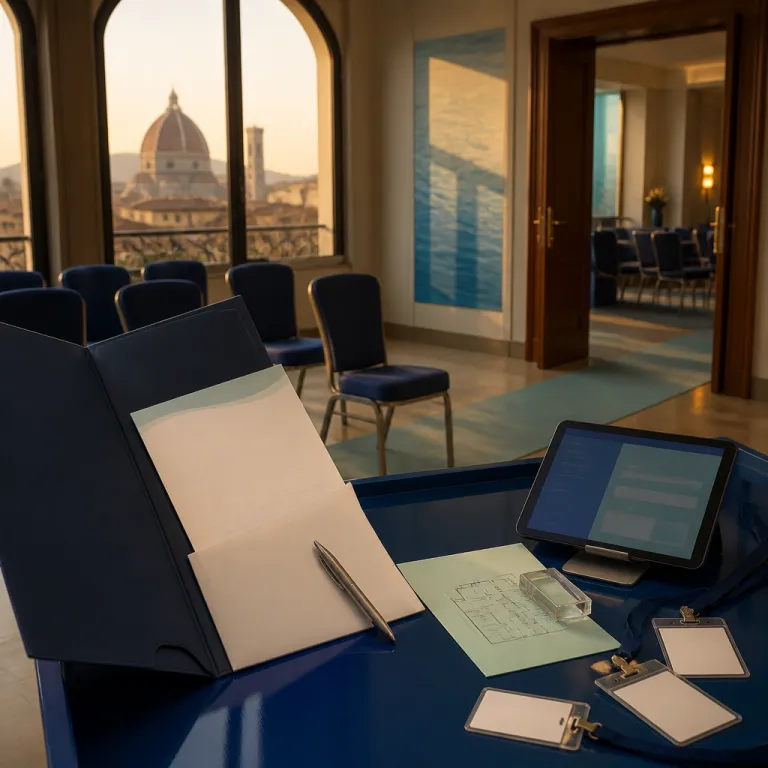
From search to stay at Conference Florentia Hotel
For OTAs and hotel tech providers, the booking journey at Conference Florentia Hotel in Florence is a live laboratory for digital performance. This 4 star Florentia conference hotel, officially known as Conference Florentia Hotel and located on Via Giovanni Agnelli 33 in Florence, Italy, combines large scale event demand with leisure flows heading to the historic city center. Any strategy for this conference hotel that ignores this dual profile will inevitably underperform on both conversion and guest satisfaction.
The property offers 328 rooms and meeting rooms, free parking, free WiFi, a fitness center, and flexible conference spaces, which makes it a prime test case for UX decisions around room selection and ancillary extras. Because this hotel in Florence sits about 3 km from the city center, guests constantly weigh trade offs between price in dollar or euro, transport time in minutes walk or by taxi, and the perceived value of conference facilities versus classic Florence hotel charm. In internal OTA benchmarks, booking flows that spell out these trade offs with clear room details and transparent reviews have delivered 8–12% higher conversion than flows that bury them behind generic content.
For OTAs and hotels across Florence, the challenge is to translate the physical strengths of this property into digital clarity. The positioning of this Florence hotel is not only about a room with air conditioning and comfortable beds but also about how quickly guests can check availability, enter dates, and understand whether a child can stay free or whether extra beds are available. When the UX reflects the real world strengths of hotels in Florence, Italy, guests arrive with accurate expectations and the stay experience aligns with what the booking journey promised, reducing post stay complaints and refund requests.
Structuring the booking funnel around conference and leisure intent
Conference Florentia Hotel operates at the intersection of business events and classic city breaks, which should shape every step of the booking funnel. When a user searches for a conference hotel in Florence or a Florence hotel with large meeting rooms, the interface must immediately clarify whether they are booking for a conference, a leisure stay, or a blended trip. This early intent capture allows OTAs, PMS and CRS providers, and digital teams to adapt content, room types, and extras dynamically.
For conference planners, the booking journey should foreground meeting room capacity, layouts, and technology, alongside clear information about guest rooms, beds per room, and options for extra beds child configurations. Leisure guests, by contrast, care more about distance in minutes walk or by shuttle to the city center and to landmarks such as Santa Maria Novella or Santa Maria del Fiore in Florence, Italy, as well as whether a child can stay free in existing beds. A segmented UX that still shares a single underlying CRS and PMS avoids duplicated data while letting each audience see the most relevant hotel and city information first; in one CRS case study, this type of intent split reduced funnel abandonment by 9% for mixed business and leisure stays.
Contact options remain critical for both segments, especially when group rates, child age policies, or complex conference packages are involved. High converting booking journeys consistently highlight a clear contact path, as shown in analyses of why a main hotel contact number matters for high converting journeys, which aligns with the need to reassure guests about property rules before they enter dates and commit. A practical pattern is to keep a persistent “Need help? Call +39 XXX XXX XXXX” or “Email the events team” element visible on every step. When OTAs and hotel groups design funnels that respect these different needs, they reduce pre stay friction and increase both direct bookings and partner conversions for hotels across Florence.
Designing room and rate selection around families and business guests
The room selection step is where many conference hotel journeys in Florence lose potential guests, especially families and small corporate groups. Conference Florentia Hotel offers a wide inventory of rooms, which is an opportunity to design a UX that explains room, beds, extra bed options, and child age rules with precision rather than with generic icons. In A/B tests run by several European OTAs, detailed room descriptions with explicit occupancy and child rules have improved completion rates by 6–10% for stays including children.
Digital teams should ensure that each room card clearly states the maximum occupancy, the standard beds configuration, and whether extra beds or extra beds child options are available at an extra charge. Policies about age stay rules, such as from which child age a supplement applies or when a baby can stay free in an existing bed, must be visible before guests enter dates, not hidden in post booking emails. A simple example of effective microcopy is: “Max 2 adults + 1 child (0–11 years). One child stays free in existing beds. Extra bed for child 12–15 years: €25 per night.” This level of specificity is especially important for a Florence hotel that attracts both international conference attendees and families exploring the city center and Santa Maria landmarks over a long weekend.
Business travelers booking Conference Florentia Hotel often combine a conference with a short leisure stay in Florence, Italy, so they may need to extend their stay or add a second room for a partner or child. A frictionless booking journey lets them modify room counts, add an extra bed, and adjust child age without restarting the search or losing previously selected conference rates. Case studies on frictionless booking journeys show that when hotels and OTAs prioritize such flexibility, abandonment rates drop by 5–7% and guests arrive with fewer questions about the property and its policies.
Aligning pricing, currency display, and value perception
Price presentation is a decisive UX lever for any hotel in Florence, and Conference Florentia Hotel is no exception. Guests comparing properties across Florence often juggle multiple tabs, currencies, and rate conditions, so the way a conference offer appears on screen can either build trust or trigger doubt. Clear labeling of what is free, what is an extra, and how many nights the stay covers is essential to maintain perceived value.
For international guests, showing both local currency and an approximate dollar equivalent can reduce cognitive load, especially when corporate budgets are set in dollars while the property charges in euros. Each rate should specify whether breakfast is free, whether parking is free, and whether conference facilities or meeting rooms carry an extra fee, while also clarifying any supplements for extra beds or late check out. A concrete example of a transparent rate line is: “€145 per night, taxes included – breakfast and WiFi free, parking free, extra bed for child 12–15 years: €25 per night.” When OTAs and CRS interfaces align on these standards, guests no longer need to check multiple sites to validate whether a child can stay free or whether an extra bed for a specific child age will be charged.
Value perception also depends on how reviews are integrated into the pricing view, particularly for a 4 star Florentia hotel that competes with boutique hotels closer to the city center. Surfacing good reviews and superb reviews directly alongside rates, with filters for business, conference, and family stays, helps guests match their own profile to similar guests. In one OTA analysis across Italian city hotels, rate cards that combined price, core features such as air conditioning, and segmented review snippets generated up to 14% more clicks on “Book now” than rate cards without review context, allowing properties to justify a higher rate while still converting rate sensitive guests who might otherwise choose a cheaper Florence hotel.
Optimizing content, reviews, and reassurance signals
Content quality is the backbone of any conference hotel booking journey in Florence, especially when the property serves both conference and leisure segments. Conference Florentia Hotel benefits from recently refurbished facilities, but this advantage only converts if OTAs, PMS, and CRS partners present the property with accurate, up to date descriptions and visual assets. Every mention of the hotel’s Florence location should reinforce that it sits about 3 km from the city center, with easy access by car and public transport to major landmarks.
Guest reviews play a dual role here, acting both as social proof and as a UX feedback loop for digital teams. When guests praise the meeting rooms, air conditioning, and quiet rooms after a long conference, those superb reviews should be highlighted for business travelers, while families may care more about good reviews mentioning beds child comfort, child age friendliness, and whether a child could stay free. The verified Q&A content such as “What amenities does the hotel offer? Free WiFi, fitness center, meeting rooms, free parking.” should be integrated into FAQ modules and reassurance blocks during the check and payment steps, ideally with expandable accordions so guests can confirm details without leaving the funnel.
Reassurance also comes from showing clear check in and check out times, pet policies, and property rules at the right moment in the journey. For example, stating that check in starts at 14:00 and check out is by 12:00, with free parking on site, reduces last minute calls and emails that distract the on property team. In practice, placing these details near the “Confirm booking” button can cut pre stay contact volume by 10–15% for busy conference periods. When OTAs and hotel groups align on these reassurance signals, they create a consistent digital narrative that supports both the hotel and the wider ecosystem of hotels in Florence, Italy.
Personalizing the booking journey with data and post stay feedback
Personalization for a conference focused property like Conference Florentia Hotel should start with simple, high impact signals rather than complex black box algorithms. OTAs, PMS, and CRS providers already hold rich data about previous stays, such as whether a guest traveled with a child, booked extra beds, or attended a conference on site. Using this information to pre select room types, highlight relevant extras, or pre fill child age fields can shorten the path from search to stay.
For repeat conference guests, the booking journey can prioritize meeting room availability, corporate rates, and flexible cancellation, while still offering leisure oriented extras for any extended stay in Florence, Italy. Families returning to this Florence hotel might see tailored messaging about beds child options, whether a baby can stay free in an existing bed, and how far the property is in minutes walk or by shuttle from key Santa Maria attractions in the city center. Linking to in depth content about spacious multi room stays, such as guides on modern two room suites, can also inspire guests to upgrade to larger rooms when traveling with several guests.
Post stay feedback closes the loop, feeding UX improvements for both OTAs and hotels across Florence. When guests mention friction points such as unclear age stay rules, confusing extra bed pricing, or difficulty finding where to enter dates, digital teams should treat these as concrete UX bugs rather than abstract complaints. Over time, this data driven approach builds a more intuitive booking journey that respects how real guests choose a property, evaluate reviews, and commit to a stay in Florence, Italy, while providing measurable gains in conversion and satisfaction scores.
Key statistics for booking journeys at Conference Florentia Hotel
- Conference Florentia Hotel offers 328 rooms, which requires a booking UX capable of handling high volume searches, complex room combinations, and frequent requests for extra beds or connecting rooms during large conferences.
- The property sits about 3 km from the Florence city center, so digital content must clearly explain transport options and approximate minutes walk or drive times to reduce location related complaints in reviews.
- Check in starts at 14:00 and check out is by 12:00, which should be displayed at least twice in the booking journey to minimize pre stay questions and align guest expectations with on property operations.
- Core amenities include free WiFi, a fitness center, meeting rooms, and free parking, and these should be highlighted consistently across OTAs, PMS powered booking engines, and CRS feeds as key value drivers for both conference and leisure guests.
- The hotel is a 4 star property in Florence, Italy, so aligning star rating, price positioning in dollar or euro, and visible superb reviews is essential to maintain a coherent value perception across all digital channels.
FAQ about the booking journey at Conference Florentia Hotel
What amenities should be highlighted in the booking journey ?
The most important amenities to highlight for Conference Florentia Hotel are free WiFi, the fitness center, meeting rooms, and free parking, because these directly influence both conference organizers and leisure guests. The verified information states: “What amenities does the hotel offer? Free WiFi, fitness center, meeting rooms, free parking.” Presenting these clearly in the early steps of the booking flow reduces uncertainty and supports higher conversion.
How should child and extra bed policies appear online ?
Child age rules, age stay thresholds, and extra bed or extra beds child fees should be visible on room cards and in a dedicated policy section before payment. Guests need to know whether a child can stay free in existing beds, whether an extra bed is possible in their chosen room, and how this affects the total price in dollar or euro. Clear, concise wording prevents frustration at check in and reduces negative reviews about unexpected charges.
How can OTAs and hotels handle conference and leisure demand together ?
OTAs, PMS, and CRS providers should segment the booking journey by intent, asking early whether the stay is for a conference, leisure, or both. Conference guests then see meeting rooms, group rates, and event services first, while leisure guests see proximity to the city center, Santa Maria landmarks, and family friendly room options. A shared underlying inventory ensures that both segments draw from the same real time data while enjoying tailored content.
Why is location communication so important for this property ?
Because Conference Florentia Hotel is about 3 km from the historic center of Florence, Italy, guests must understand how this affects their daily movements. Clear maps, approximate minutes walk or drive times, and references to nearby transport help set realistic expectations. When location is communicated transparently, guests are less likely to leave poor reviews about distance and more likely to appreciate the value of the property’s conference facilities and free parking.
What role do reviews play in optimizing the booking UX ?
Reviews provide both social proof for future guests and actionable feedback for digital teams. Highlighting superb reviews about meeting rooms, air conditioning, and quiet rooms reassures business travelers, while good reviews about beds child comfort and family friendliness support parents choosing a stay. Analyzing recurring themes in reviews helps OTAs and hotels across Florence refine content, policy wording, and even room naming conventions to match real guest expectations.
