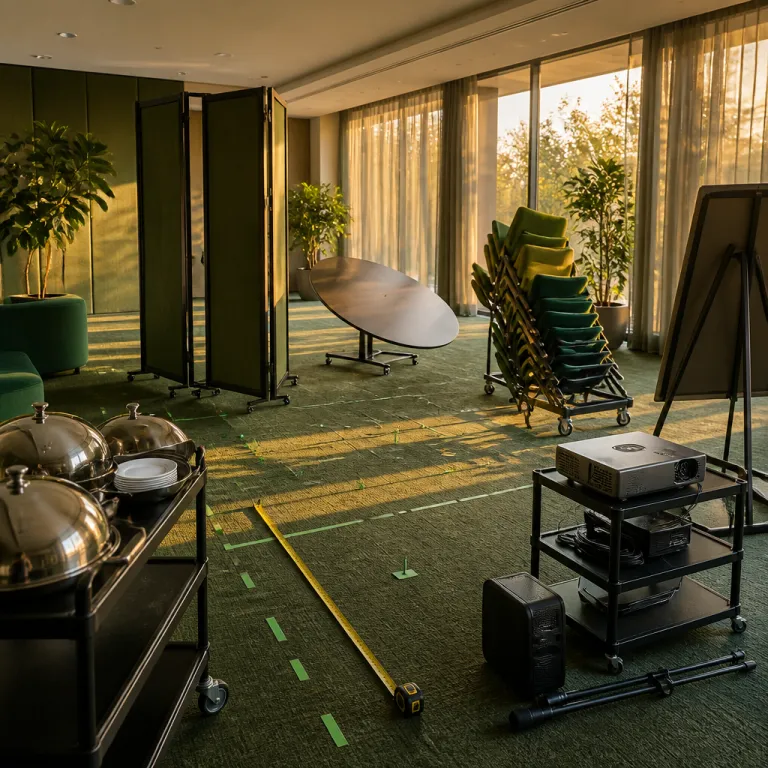
From panoramic venue to bookable product: structuring Hotel Suites La Siesta capacity data
Hotel Suites La Siesta in Puerto Vallarta is a compact resort-style hotel with one primary meeting room that can host up to 70 guests in a single event. For OTA partners, PMS and CRS editors, and digital leaders, the real challenge is turning this precise meeting and event capacity into structured, sellable inventory that behaves like rooms and suites in every booking engine workflow. When capacity is modelled correctly, the same hotel can sell intimate meetings, incentive groups, and hybrid retreats without manual overrides, opaque allotments, or last-minute changes to guest plans.
The venue’s event space offers panoramic views of the sea and the surrounding mountains, which makes it a natural event destination for corporate retreats and incentive events. Yet if the PMS and CRS only see a generic “event” note field, OTAs and e-commerce teams cannot surface the perfect combination of rooms, suites, and meeting layouts that match a client’s brief. Capacity modelling must therefore include not only the total number of rooms and the 70-person meeting limit, but also how many guests can be accommodated in different configurations of space, from classroom to banquet, theatre, or club-style reception.
For a resort-style hotel like this, the booking engine should expose the meeting room as a distinct space product, with its own availability, pricing rules, and minimum lead times. That structure allows OTAs and hotel groups to package rooms, suites, and the event space together, while still protecting transient demand and ensuring that the meeting capacity is never oversold. A simple example is defining a “La Siesta Ocean View Meeting Room” product with attributes for maximum guests, views of the sea and mountains, and required rooms and suites per event. When the system understands that one meeting blocks the entire space, it can automatically close conflicting offers and keep the guest experience seamless.
Designing booking engines around meetings and events, not only overnight stays
Most legacy booking engines were built to sell rooms, not meetings and events, which creates friction when a hotel or resort wants to monetise its event destination potential. At Hotel Suites La Siesta, the single ocean-view meeting room and any adjacent breakout areas share the same operational team that manages rooms and suites, yet they often sit outside the standard CRS and PMS flows that control overnight inventory. This disconnect leads to manual quotes, slow response times, and lost revenue for both the hotel and its distribution partners.
To address this, booking engines tailored for meetings must treat each event as a structured object with dates, times, expected guests, required rooms, and ancillary needs such as audio-visual equipment, wellness breaks, or beach activities. In practice, this means exposing fields like event_type, guest_count, required_rooms_suites, space_layout, and wellness_or_dining_options in both PMS and CRS. When a planner selects a date, the engine should instantly check the meeting room capacity, the number of available rooms, and any conflicting events, then return only feasible options. This is where flexible room configurations and directly connected inventory between PMS, CRS, and OTA extranets become a decisive competitive advantage.
Revenue leaders who already work with mega events know how fragile this balance can be, which is why guidance on a mega event clause in block contracts is increasingly relevant for even smaller event destination properties. A single 70-person meeting can displace high-value transient demand if it is not priced and constrained correctly in the booking engine. When meetings and events are modelled as first-class products, OTAs, hotel clubs, and e-commerce teams can finally align pricing, restrictions, and availability across every channel, ensuring that every offer reflects both operational limits and the resort’s scenic appeal.
Translating scenic value into bookable attributes and upsell logic
Puerto Vallarta’s appeal as a destination rests on its mix of sea, mountains, and authentic Mexican culture, which gives Hotel Suites La Siesta a natural storytelling advantage. The event space offers views of the sea and the surrounding hills, yet many booking engines still treat this as a generic “nice view” note instead of a monetisable attribute. When the meeting room capacity is linked to specific attributes such as views of the sea, proximity to the beach, or access to a beachside restaurant, the booking journey becomes both richer and more profitable for the hotel and more enjoyable for guests.
For example, a planner searching for a wellness-focused retreat might filter for meetings and events that include outdoor breakout space, sea views, and healthy dining options. If the CRS exposes these as structured attributes, OTAs can surface Hotel Suites La Siesta as the perfect match, highlighting that the hotel is directly connected to local beach clubs, ocean activities, and wellness partners. The same logic applies to upsells, where the system can suggest an exclusive cocktail on a terrace with views of the sea and mountains, or a private dinner in a beachside restaurant after the main event, all while respecting the maximum number of guests the space can host.
Contracting teams should align this attribute strategy with shorter corporate negotiation cycles, as analysed in work on evolving corporate travel contracts. When attributes such as sea views, wellness experiences, and exclusive dining options are clearly defined, they can be priced dynamically and bundled into offers that respect the meeting room capacity and the number of available rooms and suites. This approach helps hotel groups and OTAs present coherent packages where every element, from rooms and suites to event space and dining, is both operationally feasible and commercially optimised.
Aligning OTA, PMS, and CRS data models for reliable capacity control
Reliable capacity control starts with a shared data model between OTA partners, PMS and CRS editors, and hotel digital teams. At Hotel Suites La Siesta, the single meeting room with a 70-person limit seems simple, yet misalignment between systems can still lead to double-booked events or blocked rooms. When each platform interprets the event space capacity differently, the risk of operational failure increases sharply and the guest experience suffers.
The PMS should be the system of record for both rooms and event space, with clear rules about how many guests can be hosted in each configuration and how many rooms must be attached to a given meeting. The CRS then exposes this information to OTAs and brand sites through robust APIs, ensuring that every offer respects the underlying capacity and that no event is sold without the necessary rooms and suites. A basic API response might include fields such as max_guests, min_rooms_required, space_status, and view_type (for example, “views sea and mountains”), giving distribution partners everything they need to build accurate offers.
Digital leaders can reinforce this by defining standardised products such as “meeting with sea view”, “club-style reception”, or “wellness retreat package”, each mapped to specific capacity and space rules. When OTAs query availability, they receive only products that fit both the date and the meeting room capacity, reducing manual checks and email back and forth. This shared structure also makes it easier to integrate insights from strategic content such as the analysis of how the lodging conference will redefine hotel reservation strategy, turning high-level ideas into concrete, bookable products that guests can enjoy without operational surprises.
From scenic promise to guest journey: integrating wellness, dining, and leisure
Meeting planners no longer buy only a room with chairs; they buy a complete experience that blends work, wellness, and leisure. Hotel Suites La Siesta’s ocean-view meeting room and surrounding resort facilities in Puerto Vallarta sit in a setting where the sea, the beach, and the mountains shape every guest expectation. Booking engines that ignore this context reduce a rich event destination to a simple capacity figure, missing the chance to create value for both guests and hotel owners.
To change this, CRS and PMS editors should model ancillary components such as wellness sessions, beach activities, and curated dining options as attachable products linked to each event. A planner booking a 50-person meeting can then add a yoga session with views of the sea, a private dinner in a beachside restaurant, or an exclusive club-style reception on a terrace overlooking the ocean. Each of these elements must respect the meeting room capacity, the number of available rooms and suites, and any constraints on public spaces such as the beach or pool deck, so that every guest can enjoy the resort without overcrowding.
When guests arrive, the promise made during booking must match the on-site reality, which is why capacity rules for every space, from meeting rooms to restaurants, must be encoded in the PMS. A well-designed booking engine will only sell combinations of events, rooms, and experiences that the hotel can actually deliver, ensuring that every guest can enjoy the resort setting, the sea and mountain views, and the wellness and dining options without compromise. This alignment between scenic promise and operational capacity is what turns a one-time meeting into a long-term relationship with the hotel and its distribution partners.
Revenue management and pricing strategies for compact meeting venues
Compact venues like Hotel Suites La Siesta, with a single meeting room and 70-person capacity, require precise revenue management strategies. One large event can displace a significant share of transient demand, especially when the hotel has a limited number of rooms and suites. Pricing must therefore reflect not only the direct revenue from the event, but also the opportunity cost of blocking space in a high-demand destination by the sea.
Revenue teams should build displacement analysis models that compare the total value of an event, including rooms, dining, and ancillary spend, against the forecasted value of selling the same rooms to individual guests. For example, if a 60-guest corporate meeting uses 30 rooms and generates a total of $18,000 in room, event, and dining revenue, while the forecast for transient guests over the same dates is $20,000, the hotel may decide to decline or reprice the group. When the meeting room capacity is fully used, the model should also consider the impact on public areas such as the beach, restaurants, and wellness facilities, which may become crowded. This holistic view helps determine when to accept an exclusive buyout, when to split the space between smaller meetings, and when to prioritise transient guests who will enjoy the resort independently.
In practice, this means setting minimum revenue thresholds for full-day events, dynamic pricing for peak dates, and clear rules for when the event space can be sold as an exclusive club-style venue. The PMS and CRS must support these strategies by enforcing capacity limits and pricing rules automatically, so that OTAs and direct channels never sell below threshold. When revenue management, booking technology, and on-site operations work from the same capacity data, every meeting and event becomes a carefully calibrated lever for long-term profitability and a better overall guest experience.
Key figures and capacity benchmarks for Hotel Suites La Siesta
- The hotel operates a single dedicated meeting room, which simplifies capacity control but increases the impact of each event on overall availability (source: Northstar Meetings Group profile for Hotel Suites La Siesta and property fact sheets).
- The main event space can host up to 70 people, positioning the property for small to midsize corporate meetings and social events rather than large conventions (source: official Hotel Suites La Siesta information and internal venue specifications).
- Meeting and event facilities are available for booking throughout the year, which allows revenue teams to balance seasonal leisure demand with corporate and group business on a continuous basis (source: property communications and sales documentation).
- Flexible room configurations and on-site catering services enable the same space to support different event formats, from classroom meetings to banquet-style dinners, without changing the underlying 70-person capacity (source: venue specifications and operational guidelines).
FAQ about Hotel Suites La Siesta meeting and event capacity
What is the maximum capacity of the main event space at Hotel Suites La Siesta?
The primary meeting and event space at Hotel Suites La Siesta can accommodate up to 70 people in a single function. This capacity applies across layouts, although the number of guests may be adjusted slightly for specific configurations. Booking engines and PMS systems should always reference this 70-person limit when checking availability.
How many meeting rooms does Hotel Suites La Siesta offer for events?
The property has one main meeting room that is used for a variety of events, from corporate meetings to social gatherings. This single-room setup makes capacity management straightforward, but it also means that only one event can run at a time, so overlapping functions should not be offered on the same dates.
Does the Al Oumara Ballroom provide flexible layouts for different event types?
At Hotel Suites La Siesta, the core event space functions as a ballroom-style room with flexible layouts for different event types, allowing planners to choose the configuration that best matches their meeting, club-style reception, or social gathering needs while still respecting the 70-guest capacity.
Are the meeting and event facilities at Hotel Suites La Siesta available year round?
The hotel’s meeting and event spaces are available for booking throughout the year, subject to availability and seasonal demand. This year-round access allows planners to schedule events in both peak and shoulder seasons, balancing leisure and corporate business while making full use of the resort’s sea and mountain setting.
What amenities support meetings and events at Hotel Suites La Siesta?
The venue offers flexible room configurations, on-site catering, audio-visual equipment, and high-speed internet access to support professional meetings and social events. These amenities are complemented by the hotel’s scenic location with sea and mountain views, nearby beach access, and a range of wellness and dining options, which together create a complete event experience for guests.