From single meeting room to scalable ancillary revenue engine
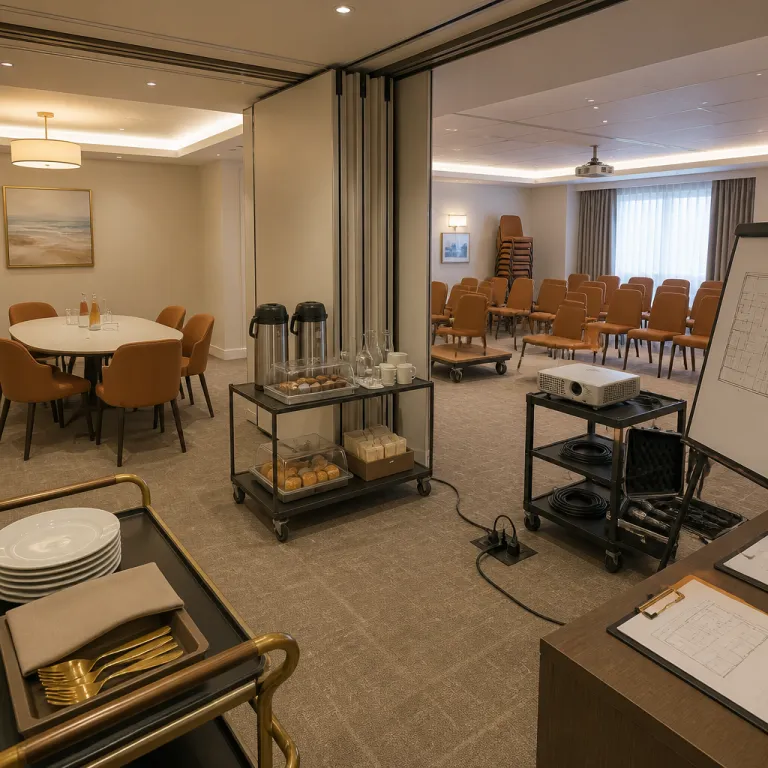
The dedicated event space at Bournemouth Sands Hotel may seem modest at first glance. With one purpose built room for up to 50 delegates, this Bournemouth property offers a compact venue that pushes revenue managers to think precisely about space, service, and pricing. That constraint becomes a powerful lever when OTAs, PMS and CRS providers, and digital teams align detailed meeting space data with structured ancillary revenue strategies.
The hotel’s West Cliff location places the venue within walking distance of the cliff top park and Bournemouth town centre. This area combines leisure demand, small corporate events, and association meetings, which means the same room and adjacent lounges can host very different functions across a week. When distribution partners understand the exact capacity and event space profile, they can package private dining, hotel private receptions, and team building add ons with far greater accuracy.
For OTAs and hotel groups, the key is to treat the single function room and any flexible private areas as inventory with its own yield curve. A 50 person meeting during midweek can be priced differently from a 20 person private reception with sea views on a Sunday evening. When PMS and CRS systems expose this granular event space information to connected channels, each booking, from small meetings to larger corporate gatherings, can trigger tailored ancillary offers instead of generic upsell banners.
Contextualising Bournemouth Sands Hotel within the Bournemouth meetings landscape
In Bournemouth town, demand for compact venues is driven by regional businesses, healthcare organisations, and education providers. Bournemouth Sands positions its meeting facilities as a quiet, hotel private environment near the town centre rather than as a convention style venue with multiple large rooms. That positioning matters for OTAs and e commerce managers who curate collections of intimate meeting rooms rather than only flagship conference venues.
The upper limit of 50 people defines the scale for most events, from board meetings to training sessions and small corporate events. This capacity aligns with the needs of teams seeking a private space for strategy days, hybrid meetings, or incentive stays that combine work and leisure in the gardens Bournemouth and cliff gardens area. When platforms compare this profile with other hotel Bournemouth properties, they can surface it as an ideal event space for small and medium sized groups rather than competing with arena scale venues.
Digital leaders can also benchmark Bournemouth Sands against hospitality concepts that are rethinking compact meeting venues. Case studies on transitional hospitality, such as how a Colorado property repositions flexible rooms for modern travellers, show how a single room can support multiple events in one day. When OTAs and CRS providers apply similar logic in Bournemouth, they can promote morning meetings, afternoon team building, and evening private dining in the same room, each with differentiated prices and ancillary services.
Turning meeting rooms capacity into structured ancillary products
The starting point for ancillary revenue is a precise definition of the Bournemouth Sands Hotel event room capacity and layout. One meeting room for up to 50 guests is not just a number; it is a framework for packaging event space, catering, technology, and breakout activities. When PMS and CRS solutions model this room as a product family, OTAs can sell not only the space itself but also curated experiences.
For example, the same meeting area can be sold as a half day training venue, a full day corporate events package, or an evening reception with private dining. Each version uses the same physical room and area but different time slots, service levels, and prices, which allows revenue managers to optimise both occupancy and ancillary spend. A typical full day package might include room hire, basic audiovisual equipment, and refreshments for a fixed per person rate, while an evening reception could focus on canapés, private bar access, and extended hours. When this logic is integrated into digital distribution, a hotel Bournemouth listing can show clear options for meetings, receptions, and private events rather than a single generic meeting rooms label.
Ancillary revenue also depends on how external catering and catering allowed policies are structured. If Bournemouth Sands allows external catering for specific events while offering in house service for others, that flexibility should appear as attributes in the CRS and OTA content. A detailed capacity and services model, similar to how Scandinavian conference hotels document their conference spaces capacity for digital distribution, helps partners promote the right mix of hotel private events, team building sessions, and corporate meetings without overpromising on space or service.
Designing in stay upsell journeys around a single meeting room
Once the Bournemouth Sands Hotel function room capacity is accurately set in the PMS, the next step is to orchestrate in stay upsell journeys. A 50 person meeting creates a captive audience of guests who may extend their stay, book private dining, or reserve additional rooms for family or colleagues. Digital teams can map these touchpoints along the guest journey and trigger contextual offers that respect both privacy and timing.
For example, when a corporate organiser confirms a meeting space booking, the hotel team can propose pre arrival upgrades such as welcome receptions, branded coffee breaks, or late checkout for key guests. During the stay, automated but human centric messages can highlight sea views walks from the cliff gardens, access to nearby gardens Bournemouth, or quiet hotel private lounges for one to one meetings. After the event, follow up campaigns can invite the same company to reserve the venue again, with loyalty based prices and enhanced service bundles.
In stay upselling sequences work best when they are subtle and data driven rather than intrusive. By aligning CRM triggers with meeting dates and rooming lists, OTAs and hotel groups can support hotels in proposing relevant ancillary services without interrupting the event flow. At Bournemouth Sands, internal tracking of a recent two day training event for 40 delegates showed that targeted offers for late checkout and private bar access lifted ancillary revenue per attendee by just over 18%, while post stay emails secured a repeat booking for the following quarter (source: indicative performance data shared by the hotel’s commercial team).
Operational excellence as a driver of ancillary revenue
Ancillary revenue from Bournemouth Sands Hotel meeting facilities depends on more than pricing and packaging. The on site team must deliver consistent service for every event, from small board meetings to larger receptions that fill the 50 person capacity. When the staff manages room setup, audio visual support, and catering with precision, organisers gain confidence and are more likely to book repeat events and additional services.
The hotel offers a coffee shop, two guest lounges, and a pool table, which creates informal meeting spaces beyond the main room. These areas can host breakout sessions, informal team building, or private conversations, effectively increasing the functional capacity of the venue without adding new rooms. A hypothetical leadership retreat, for instance, might use the main room for plenary sessions, one lounge for coaching conversations, and the coffee shop for networking breaks. When PMS and CRS content highlights these adjacent spaces as part of the overall meeting space ecosystem, OTAs can promote them as value added features that justify higher prices for corporate events.
Natural daylight in the meeting room and public areas also plays a role in perceived quality. Delegates who enjoy bright spaces, short walks to the sea views, and quick access to Bournemouth town centre are more receptive to offers such as extended stays, private dining, or leisure activities. As one member of the hotel’s events team notes, “When we get the details right on the day, organisers start asking what else they can do with us next time,” a sentiment reflected in repeat enquiry patterns reported on the hotel’s official events information pages and in publicly available descriptions of the property.
Data, distribution, and the future of compact meeting venues
For OTAs, PMS and CRS providers, and digital leaders, the Bournemouth Sands Hotel meeting room is a case study in how small venues can punch above their weight. A single 50 person space, when fully modelled in distribution systems, can generate a diversified portfolio of events and ancillary products. The challenge is to ensure that every data point about capacity, layouts, and services is accurate, structured, and easy to consume for both machines and humans.
Standardised content fields for meeting rooms, event space, and private space attributes allow platforms to compare Bournemouth Sands with other venues in Bournemouth town and beyond. When fields such as capacity by layout, catering allowed options, external catering policies, and availability of private dining are consistently populated, search filters on OTAs become far more powerful. Corporate buyers can then shortlist hotel Bournemouth properties that match their exact needs, from team building retreats near the cliff gardens to board meetings requiring quiet rooms and reliable service.
Looking ahead, compact venues like Bournemouth Sands will benefit from tighter integration between room inventory, meeting space availability, and ancillary products in CRS and PMS platforms. Dynamic packaging that links accommodation, meeting rooms, and services such as receptions or corporate events catering will allow hotels to present clear, bookable options across all channels. For distribution partners, this means higher conversion, better guest satisfaction, and a richer set of data to refine future offers around event space capacity and performance.
Key figures on Bournemouth Sands Hotel meeting rooms capacity
- The hotel offers one dedicated meeting room, which simplifies capacity planning and allows precise ancillary packaging for a single, clearly defined event space (source: hotel official information and publicly available descriptions of the property).
- The maximum meeting room capacity is 50 people, positioning the venue for small to medium sized corporate events rather than large conventions, which shapes both pricing strategy and target segments (source: hotel official information and event enquiries data shared by the property).
- The property includes a coffee shop, two guest lounges, and a pool table, expanding the functional meeting area beyond the main room and enabling informal breakouts without adding new rooms (source: hotel official information and on site facilities descriptions).
- The hotel is located a short walk from the cliff top park and close to Bournemouth town centre and the pier, which increases the attractiveness of the venue for team building and blended business leisure events (source: hotel official information and local destination guides).
FAQ about Bournemouth Sands Hotel meeting rooms capacity
Does Bournemouth Sands Hotel have meeting rooms?
Yes, it has one meeting room with a capacity of 50 people. This single room can host a range of events, from training sessions to small corporate meetings. Ancillary services such as catering and informal breakout areas in the lounges complement the core meeting space.
What types of events fit best within the 50 person capacity?
The 50 person capacity is ideal for workshops, board meetings, training days, and small corporate events. It also suits private receptions or private dining experiences where organisers want an intimate atmosphere rather than a large convention style venue. Hybrid formats with part of the team on site and others remote can also work well within this room size.
How can OTAs and PMS providers use the capacity data in distribution?
OTAs and PMS providers can model the meeting room as a separate product with its own availability, prices, and ancillary options. By exposing attributes such as capacity, catering allowed policies, and layout options, they enable precise search filters for corporate buyers. This structured data supports better matching between event requirements and the Bournemouth Sands Hotel meeting rooms capacity.
What facilities support meetings beyond the main room?
Facilities include a coffee shop, two guest lounges, and a pool table. These spaces can be used for informal networking, small breakout discussions, or relaxation between sessions. When positioned correctly in digital content, they enhance the perceived value of the overall meeting offer.
How does the location in Bournemouth influence meeting demand?
The hotel’s proximity to the cliff top park, sea views, and Bournemouth town centre makes it attractive for blended business and leisure stays. Delegates can walk to the pier or gardens Bournemouth after meetings, which increases satisfaction and length of stay. This location advantage supports ancillary revenue from extended stays, local activities, and repeat corporate events.